Friday, 7 June 2013

a field student turns back time to be in time for the first flower of the bramble hedge to open but in the future he was still too late


At 23 minutes past a witching hour 'Field Study's Man in E17' tapped into the supernatural forces of the site and caused time to turn back so that he can continue to fool himself he is reporting daily on his allotment field studies. It was early Saturday morning however FSMiE17 needed it to be Friday to avoid the failure and humiliation of a missed deadline. A simple sequence of clicks on the 'Post settings - Schedule' menu allows for this deceit; well a deception it would be but for the brutal honesty of the field student in his undeceiving deceptions.

At 39 minutes past the witching hour he took me here and then there (above) and pointed to the first of the bramble flowers (below) to open. Is this the first, the very first, flower of the whole hedge? The field student tends to think he is so 'with it', as in the allotment site, that he can be there for the first flowering emanations of it's perennials. 'Look! There are thousands of them to come!' I thanked the field student for taking me back to the first flower however I feared his vanity and egotism,in part fueled by the seductive forces of the site, had triggered a timequake. Readers of Kurt Vonnegut will know this can be, depending on the time, a laughing and/or no-laughing matter. What happened, what is 'Timequake' about, what was it about? Have I forgotten? Will I have to read it again? Will I forget the moment I start reading? The field student pretended to be more familiar with the novel (and the asynchronous Kilgore Trout) and speculated obtusely that each and every flowering will take me back to the first. I have to confess I was terrified and that what ensued was an episode of shuddering florophobia. 


Blackberry - 7th June 2013

At 81 minutes past the witching hour he recalled another plant in bloom beneath the dense bramble canopy. The field student thinks it is an allium.


Thursday, 6 June 2013

Wednesday, 5 June 2013

a swim in the field with Heqet, Heqat, Hekit, Heket, Hegit, Heget and pale Hecate

Frog - 1st June

Our man in E17 has found himself emerging from the 5th night of a very dark state of mind in which, 'nature seems dead and wicked dreams abuse'.* What or where is the source of the darkness? Some days ago the field student sank into the glistening darkness of a frog's eye. The caws of fox mobbing crows echoed and ricocheted murderously around him as he disappeared into a field of vision he had only imagined. He told me, even though he has been there (in the darkness of a frog's eye) he still thinks he is imagining it rather than remembering it. 'What is it that makes you think that?' I asked him.

*Macbeth, Shakespeare.

Tuesday, 4 June 2013

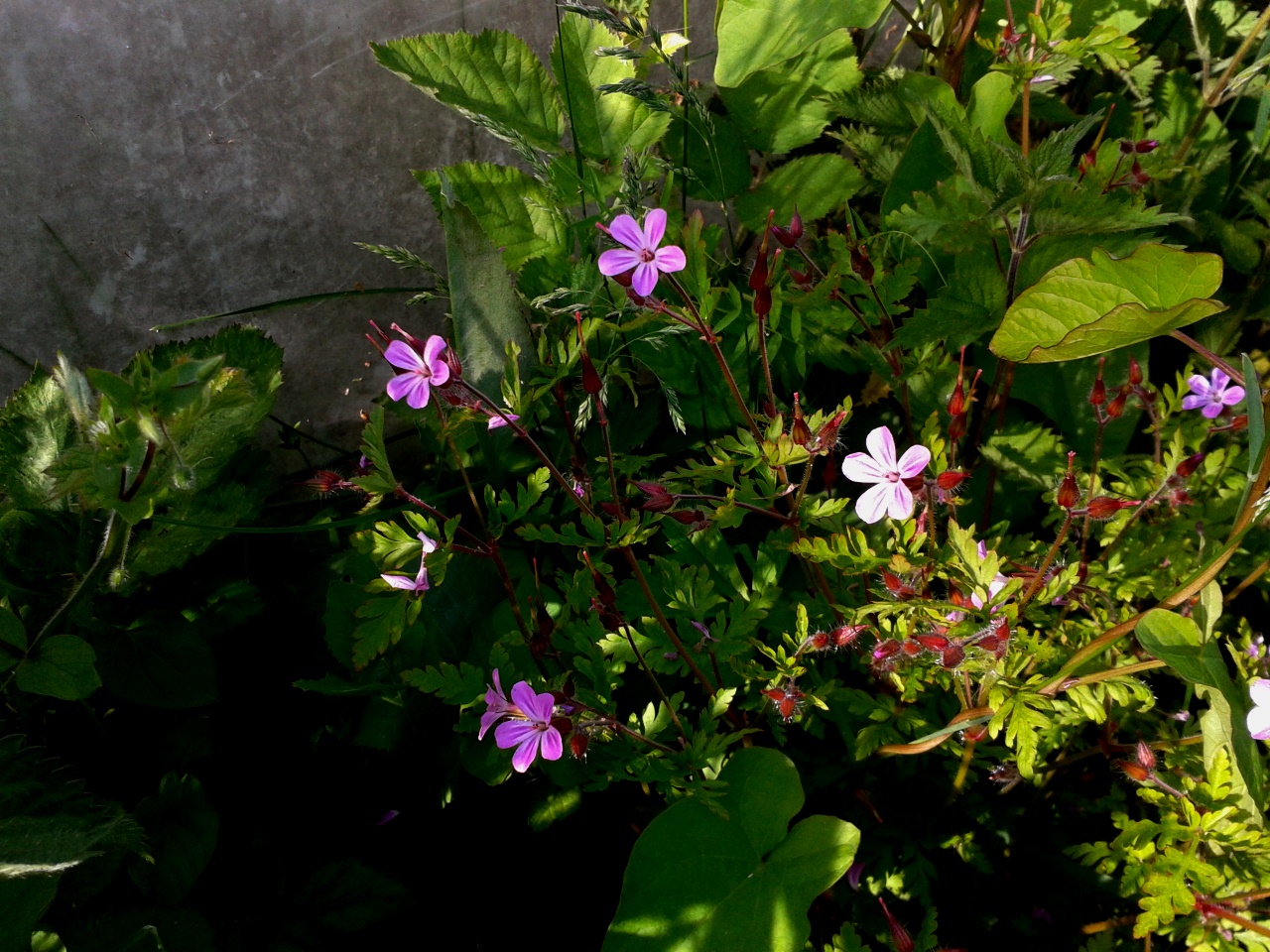
lost in a field of Crane's-bills, Stork's-bills and Vetch, he thinks.


Crane's-bill? - 4th June 2013


Stork's-bill? - 4th June 2013


Vetch? 4th June 2013

Monday, 3 June 2013

a field studied with red eyes


Honeybee drones observed in hive 2nd June 2013

Drones with red eyes is a phenomenon we had not seen or noticed before our hive inspections yesterday. We were alarmed and as a conscientious field student 'our man in E17' did some research to find an explanation and allay his and our fears. The top image is of a drone with black eyes as we would expect and next down is an image of a drone with reddish eyes - a red I thought quite ruby or rubine even if a little tarnished. The phenomenon does not, as far as I am aware, signify any disease. Drones can have eyes other than the 'wild type' black because they develop from unfertilised eggs and thus recessive genes are expressed.

A field worker explains in some more depth here - http://beeinformed.org/2012/04/3939/

The increasingly red eyed field student returned to the allotment this evening and admired the Brussel sprouts of the Rubine Red variety growing with what seems to be a refreshing health and vigour. When the stems and veins started turning black the field student feared another alarming metamorphosis was taking place.


Sunday, 2 June 2013

a field study of inner liquescence

 1st June 2013

 A-D

 A-B

 B-C

D-A

 E-F

 G-H

 I-J

 K-C

 K-A
 F-E

 F-L

 H-C

 H-M

 H-G

 C-K

 C-B

O-N

Field Study's Man in E17 is commissioned with the task of collecting materials from the site, the purpose of which is to provide insights into the various trans-formative processes and energies the site exerts. 


The field student was startled by some mysterious alchemical force that had transformed or transmogrified bone into honeycomb in the depths of his pockets. Had he been paying more attention to the contents of his pockets while he beat and mapped the bounds of the site he would have been able to report precisely when and where the transmogrification occurred. We may find him walking around the site in the dark trying to retrace his journey in an effort to turn the comb back into bone to find the line and/or point of transformation. Why in the dark? Our man in E17 fears his very own skeleton has been transformed and that the summer beat of the sun's rays will find him in a state of inner liquescence; our man inchoate we might say. 

Saturday, 1 June 2013

a field study of lost and found flavours


Unidentified Plant - A - 31st May 2013

Which plant does the flower belong to? It is one of the many plants with a place in the field student's limited knowledge of the flora of the allotment site. Of course, all knowledge is limited though 'Field Study's Man in E17' is earnestly (he insists) striving to expand his knowledge and so perhaps find and/or lose himself in that which is beyond just knowing; a fool in search of some site specific wisdom. But here in our head, that is between Julian Beere and 'Field Study's Man in E17', there is a discussion concerning how it is to know, the nature and culture of creating and acquiring knowledge.

What has he found here in the shade of a splendidly blossomed hawthorn in procession with a dog rose and a bay tree?


31st May 2013 - North Chingford.
We would hazard a guess at 'Herb Bennet/Wood avens/Colewort/St Benedict's Herb - Geum urbanum ?

How did we get to this identification? 

A page by page journey through the entire Flora Britannica, (Richard Mabey) 

A visit to this site - http://wildflowerfinder.org.uk/ - yellow petals to begin

A study of leaf shape illustrations in 'Readers Digest Encyclopaedia of Garden Plants and Flowers' (4th ed' 1987)


We watched and listened to this man: http://www.youtube.com/watch?v=KAouYYJPFfI

and followed a trail to here: http://www.eatweeds.co.uk/


walked around the study and picked from his book shelf: Food for Free (Richard Mabey)

And so much more (but what) has been omitted from this (mis-)identification process?


We wonder if any soups and broths dished up during the course of, Appetite, will have as an ingredient, Herb Bennet, recalling the long lost flavours and palates of 16th century appetites?